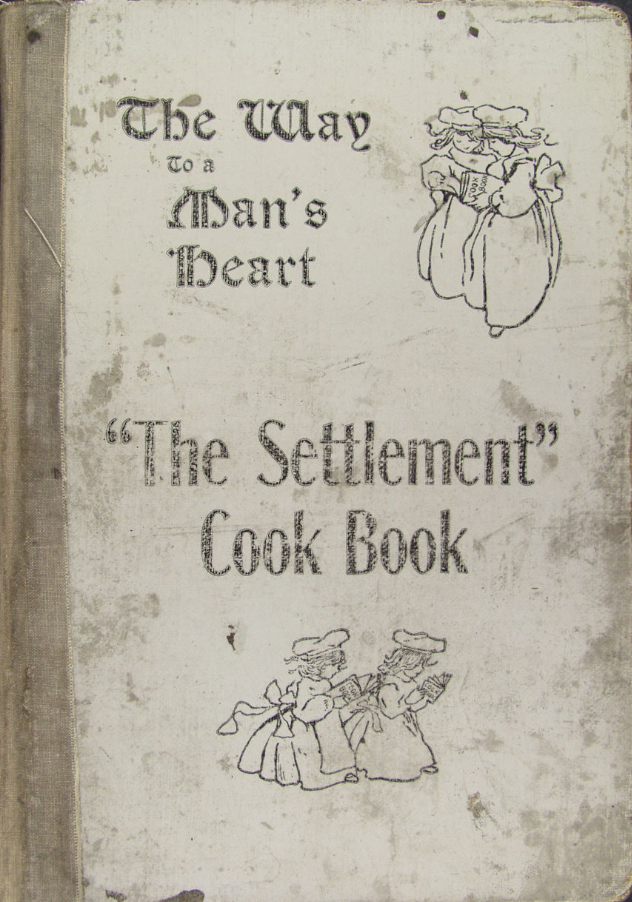
Image: Unknown authorUnknown author · Public domain
The Boston Cooking-School Cook Book
- Year
- 1896
- Era
- 19th century
- Origin
- USA · Americas
- Language
- English
- Category
- American
The Boston Cooking-School Cook Book, compiled by Fannie Farmer and first issued in 1896, became one of the most influential American domestic manuals of its era. Its lasting contribution lay in codifying the use of level standardized measurements, replacing the imprecise handfuls and pinches of earlier kitchen practice. By insisting on exact quantities and clear method, it helped transform home cookery into a reproducible discipline and shaped subsequent American recipe writing.
Cooking from this book
Boston Brown Bread
An iconic New England staple from Fannie Farmer's 1896 classic, this dense, sweet steamed bread is the traditional partner to Saturday-night baked beans. A modern cook can substitute buttermilk for sour milk, and the loaf is often finished by drying out briefly in a moderate oven (about 325°F) after steaming.
Boston Brown Bread
- 1 cup rye meal
- 1 cup granulated corn meal
- 1 cup graham flour
- ¾ tablespoon soda
- 1 teaspoon salt
- ¾ cup molasses
- 2 cups sour milk, or 1¾ cups sweet milk or water
Mix and sift dry ingredients; add molasses and milk, stir until well mixed, turn into a well-buttered mould, and steam three and one-half hours. The cover should be buttered before being placed on mould, and then tied down with string; otherwise the bread in rising might force off cover. Mould should never be filled more than two-thirds full. A melon mould or one-pound baking-powder boxes make the most attractive shaped loaves, but a five-pound lard pail answers the purpose. For steaming, place mould on a trivet in a kettle containing boiling water, allowing water to come halfway up around mould, cover closely, and steam, adding, as needed, more boiling water.
Reproduced from the public-domain text via Project Gutenberg. Spelling lightly modernised; the headnote is editorial.
Parker House Rolls
Named for Boston's Parker House hotel where they were popularized in the mid-19th century, these soft folded rolls became a hallmark of American dinner tables. A 'hot oven' here corresponds to roughly 400 to 425°F.
Parker House Rolls
- 2 cups scalded milk
- ¼ cup butter
- 2 tablespoons sugar
- ½ yeast cake dissolved in ¼ cup lukewarm water
- 1 teaspoon salt
- Flour
- 1 egg white
Add butter, sugar, and salt to milk; when lukewarm, add dissolved yeast cake and three cups flour; cover, and let rise until light; cut down, and add white of egg well beaten, and enough flour to knead (it will take about two and one-half cups); let rise again, toss on a floured board, knead, pat, and roll out to one-third inch in thickness. Shape with a biscuit-cutter, first dipped in flour. Dip the handle of a case knife in flour, and with it make a crease through the middle of each piece; brush over one-half of each piece with melted butter, fold, and press the edges together. Place in greased pan, one inch apart, cover, let rise, and bake in a hot oven twelve to fifteen minutes.
Reproduced from the public-domain text via Project Gutenberg. Spelling lightly modernised; the headnote is editorial.